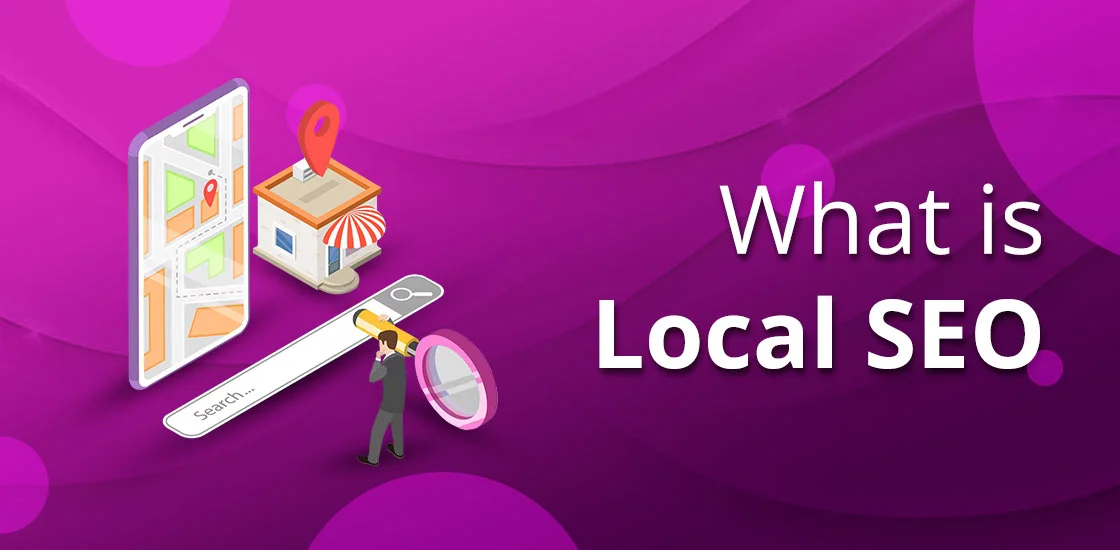
Local SEO (Search Engine Optimization) is the set of practices to target area-specific audiences searching for the products or services that you’re offering. It’s one of the ways to reach out to your audience in online marketing in nearby locations. If you run a business and want to increase your popularity, local SEO services can help you achieve that. Before going into the complete process, understand well what is local seo, and other important terms that you should know.
Summary At A Glance!
- Reach out to your targeted customers with Google Business Profile. Claim your GBP, optimize it, and manage it from your home.
- For a GBP to work, focus on keywords, descriptions, photos of your store, managing reviews, working hours, etc.
- Business listing on Google is a free practice. You just need an offline store at your location.
- You can sell through your website, Optimizing with local seo. It’s a process of local keyword research, content Optimization, schema markup, landing pages, and more.
What Is Local SEO?
Local SEO is a digital marketing practice to help local businesses scale up in their cities. The practices involve targeting local keywords, city-based keywords and boosting your business’s reach. You can do local seo using two ways: organically by focusing on local keywords, and Optimizing your store online using Google’s Business Profile and Maps.
Local seo targets local keywords in which your product or service and the area name is included. For example, “Best Digital Marketing Agency in San Francisco.”
Sometimes, the local searches contain the product and the term “near me.” In such a case, Google’s algorithm detects users’ locations and fetches your business to them – if your business lies near them.
This guide will explain everything about listing a local business on Google Business Profile and Optimizing seo strategies to reach the target audience.
How Local SEO Works
A local business is first identified by Google and other search engines (where it’s located, services or products it offers, and how trustworthy your business is so that search engines can offer it for the nearby searches.
Therefore, business optimization is the most important aspect of Local SEO.
There are essential SEO factors that Google and other search engines consider to decide which businesses to show among many. We have discussed them below, so you’d better focus on them.
Factors Search Engines Consider To Rank Your Local Business
- Checks if business is well-optimized: A proper business name, contact details, a clear description about the business, proper keywords, and consistent address, all of these parameters are considered.
- Listing of business: Search engines give importance to the business having themselves cited on the local directories. It’s a trust factor, and improves your business rank.
- Consistent NAP throughout: It’s necessary to maintain a consistent Name, Address, and Phone number. This helps customers find you easily because search engines like Google find that the business is legitimate and consistent.
If you have a basic idea of how SEO works, you must be thinking about how Local SEO is different from Traditional SEO. This is explained in the coming headings in detail:
Local SEO vs Traditional SEO
The clear difference is that local SEO focuses on a particular location, targeting a select group of individuals for selling a product or service. Whereas Traditional SEO has no location priority, it just focuses on ranking your website on the first page of search engine result pages (SERPs). The difference is clearly visible in the keyword selection and other seo strategies.
Check the given table.
| Aspect | Local SEO | Traditional SEO |
| Geographic Scope | Specific city/Neighborhood/service area | National/global, no location limits |
| Target Keywords | Geo-specific (“dentist near me”, “pizza in New York”) | Broad/generic (“best dentist”, “pizza recipe”) |
| Search Results | Map Pack, Google Business Profile, local finder | Organic blue links, featured snippets, AI Overviews |
| Key Ranking Factors | GBP optimization, NAP citations, reviews, proximity | Backlinks, content quality, and domain authority |
| Primary Platforms | Google Business Profile (critical), local directories | Website content, analytics tools |
| Search Intent | High-intent, immediate (visit/call/book now) | Informational/transactional, broader |
| Link Building | Local sources (chamber, directories, news) | High-authority sites (any relevant niche) |
| Best Business Types | Physical stores, service pros (restaurants, plumbers) | E-commerce, SaaS, national brands |
Why Local SEO Is Important in 2026
Local SEO is more important in 2026 than ever, and the reason is simple: More and more businesses want to sell their product and services, and therefore, they need business optimization for their business in a particular area or Local SEO.
- Rising “near me” searches: The graph of nearby searches is rising, leveraging local businesses to fulfil the requirements. In fact, over 1.5 billion searches contain the “near me” keyword. This depicts that users are looking for the nearby store or service more often. Moreover, almost half of all searches are local intent-based.
- Rising Mobile Usage: Nearby searches are mostly performed on mobile devices. Around 6 billion mobile phones are used worldwide, and the number is still rising.
- AI integration: The Integration of artificial intelligence boosts local searches, as users ask through voice search on search engines when they need a product or service. So, Optimizing local business sites or GBP is more important now.
- Review is preferred over Ads: In 2026 or above, the impact of reviews on the business is more than the advertisement or sponsored ads. When a new user finds your business online, he looks for others’ experiences with the store or service.
- High advertisement cost: The average monthly spend on Google Ads is between $1,000 to $10,000. Hence, local seo is affordable and a sustainable way to grow a business.
What Are Local SEO Ranking Factors?
In the Local SEO practices, a few factors decide whether your listing will be visible to your targeted audience for the given search term in your location or not. These deciding factors are given here:
Google checks the relevance, distance, and prominence of your business to determine if it’s worth including in the users’ search results. When your business stands out from others, has products or services that one is looking for, and is placed nearby of the searcher, then it’s highly likely to be included.
To ensure each of the three factors is met, perform essential activities for Google Business Profile Optimization:
NAP consistency (Name, Address, Phone):
First thing you do as a store owner is adding name, address and contact details for your business. So, your business is easily remembered, contacted, and reached. The latest contact details and the address help Google believe that your business is a trusted one.
Reviews and Ratings:
Your business should get feedback in the form of reviews or ratings on a scale of 1 to 5; 1 being the least satisfied, and 5 being the most satisfied. The review displays how satisfied your customers are and what they think about you. Reviews are also the judgment criteria for a new customer, which ultimately affects your business sales and engagement.
Local Citations and Business Listings:
If your business is cited on the popular local business directories, it increases the chances for your business to skyrocket. This kind of listing is known as structured citations because it follows a proper NAP (Name, Address, and Phone) concept, making search engines easily find your business. However, listing businesses on a blog post and other kinds of websites is known as unstructured citations. In both, structured citations are preferred for business growth.
Local Keywords:
Your online business should include the relevant keywords. It includes the keywords having your area name in it, industry name or product mentions, etc.
For example, if you provide coaching for football players and that’s in Chicago, your local business should include keywords like: Football coaching in Chicago. This means it represents that you offer coaching to the football players based in Chicago.
On-Page SEO Signals:
Focus on on-page Optimization of your website for the local businesses. This helps you rank higher in SERPs. The practices include adding the local intent-based keywords in the title and descriptions, optimizing the content with the inclusion of local keywords, and adding details like Name, Address, and Phone number, and schema like Local Business for AI to find it more often.
Local Backlinks:
Focus on gaining links from authoritative and trustworthy local websites. It helps boost your business as a recognized store by search engines in your area. You should work on gaining quality backlinks.
User Behavior Signals:
How users interact with your business is also a signal that Google considers before ranking it in a geographical region. Among these factors is the Click Through Rates – how often users interact with your site or business listing. Optimize for the clickless search: ensure your ‘Call,’ ‘Directions,’ and ‘Booking’ buttons are active so customers can act immediately.
How To Setup & Optimize Google Business Profile
Start by setting up your Google Business Profile and then learn to optimize it easily.
1. Set Up Google Business Profile (GBP):
Visit the official Google Business Profile website.
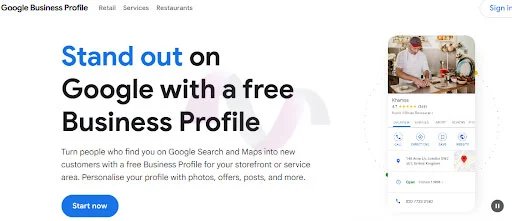
Select the ‘Start Now’ option.
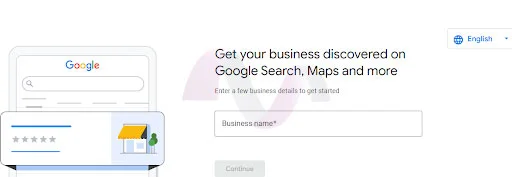
Enter your business name to be discovered across Google search, Map and others.
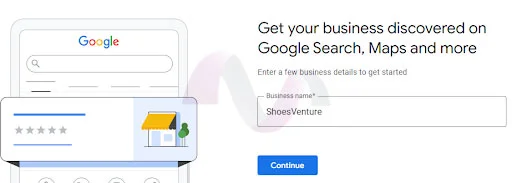
Tap continue.
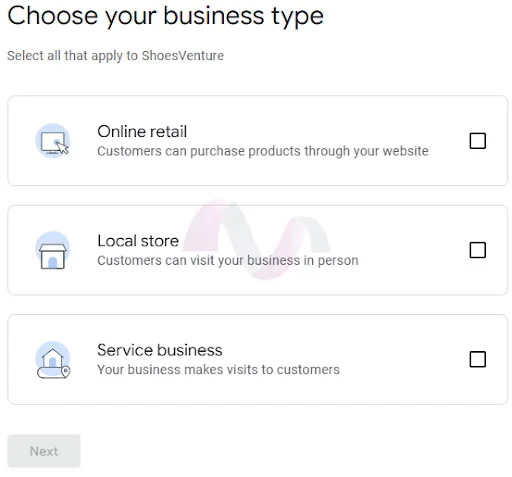
Select your business type: Online retail, Local store, and service business.
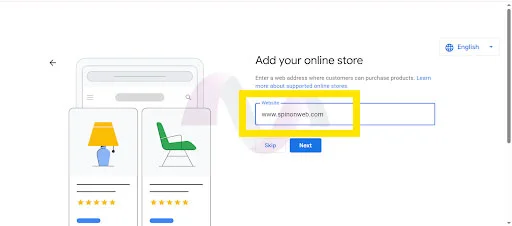
Add your business website here.
Add “Business Category” and tap ‘Next’
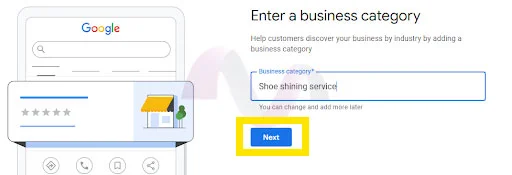
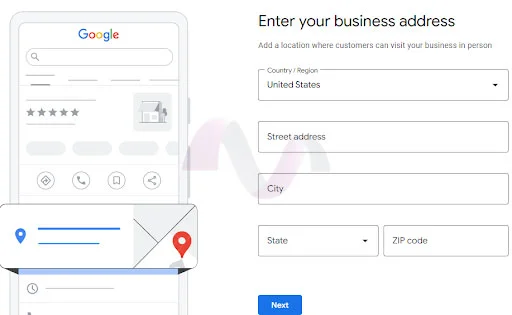
Enter your business address:
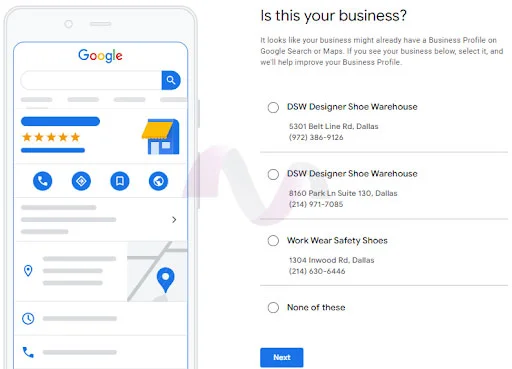
If Google finds a business already in that location, it suggests the following business names. If you own a store already, select one of them; if not, select ‘none of these.’
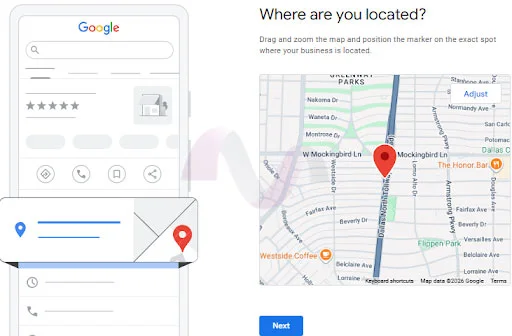
Locate your store in the given map.
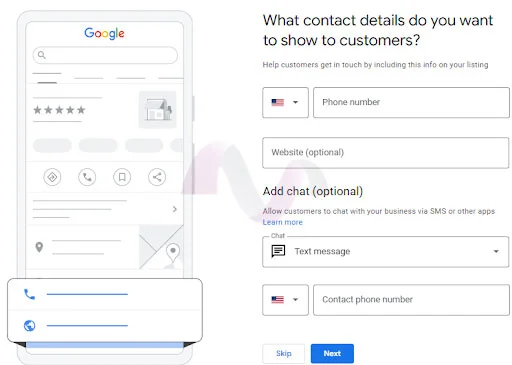
Enter contact details that your customers can see and use to connect with you.
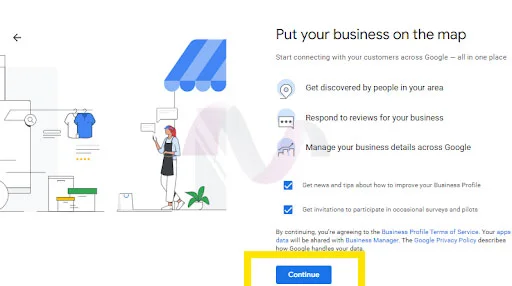
Finish up the process by checking boxes and tapping continue.
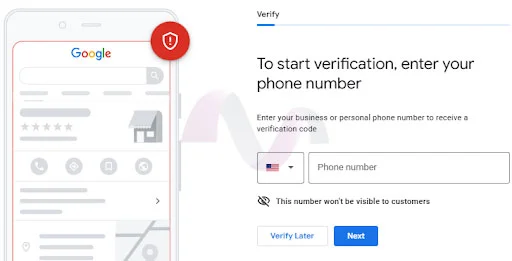
Enter your contact number for the verification process.
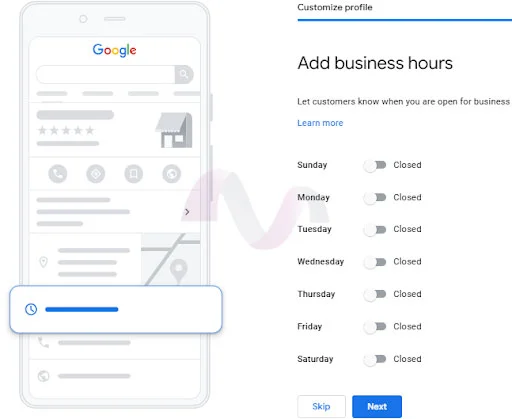
Add business operating hours: when it’s open and closed.
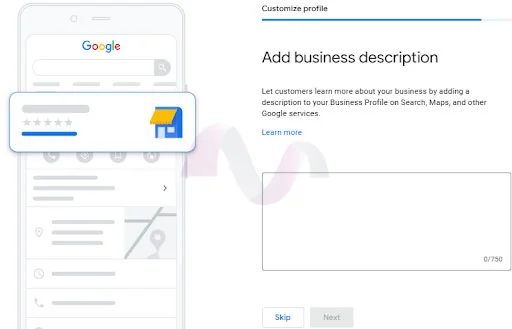
Mention the business description. Inform what you offer to the customers with correct keywords.
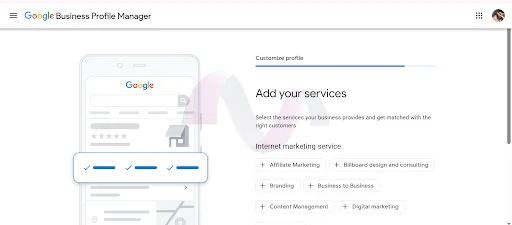
Customize your profile: choose services you deal in.
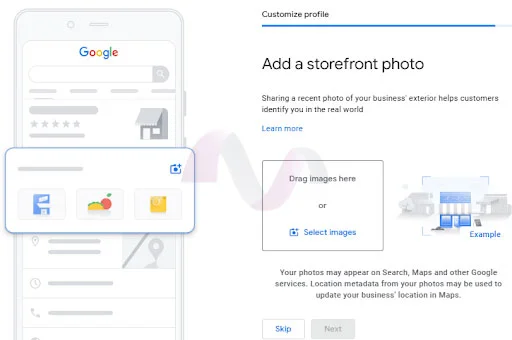
Add a business profile picture.
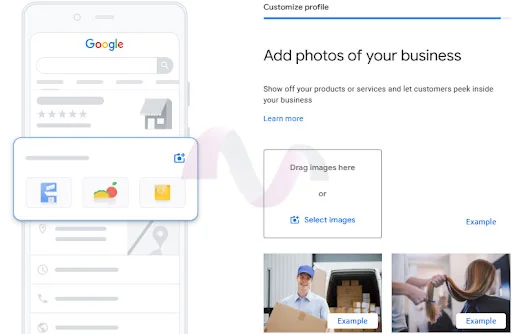
Add other photos of your business so it looks authentic.
Customize your profile after you’re verified.
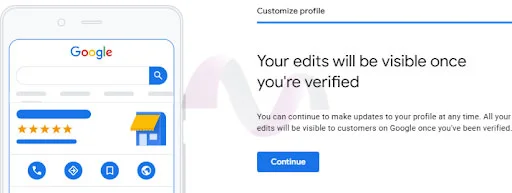
After you set it up entirely, it looks like this:
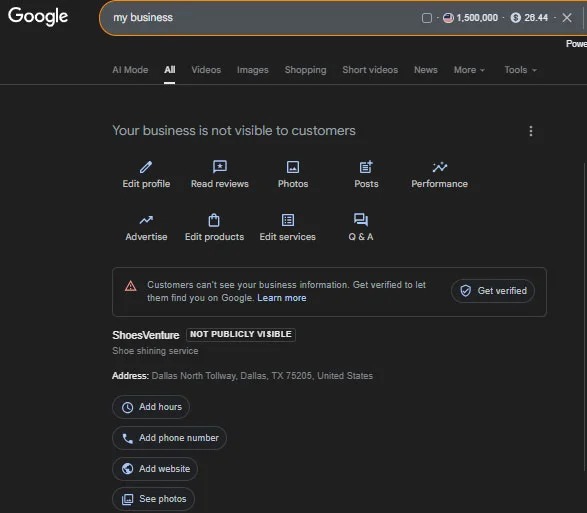
Note: in 2026 or above, you may be required to follow google video verification process, as it is now a standard way to prove your physical location.
2. Optimize Google Business Profile
After you’ve set your GBP, focus on these essential Optimization tips:
- Write description: Describe your business in short, up to 700 characters, including your business keywords appropriately.
- Add real pictures, videos, and posts regularly: Upload the latest photos of your store frequently. Click the fresh pictures so it looks authentic to users and search engines. And create short 10-second vertical videos of your store or products on Instagram or TikTok for greater reach.
- Add categories: Add a relevant category for the product to be discovered easily when a search is made.
- Add correct business operating hours: mention the opening and closing times of your business. And make sure you follow it as well for more customer retention.
- Add QnA: Mention the most common questions customers can ask, and their answers as a store owner.
- Respond Reviews: Have a keen eye on the users’ comments after they have visited your store and availed your services. Ensure you reply to each customer, whether thanking them for their appreciation or suggesting ways to improve something.
Role Of Reviews In Local Seo & How You Can Manage
Reviews are an indication to the search engines that your business is trustworthy. When someone leaves a comment on your Google Business Profile – positive or negative – search engines consider it as a signal to determine whether your business is worth mentioning for a related search term.
Manage reviews to boost engagement
Make sure you get the reviews every time someone visits your store or shops online from your store. The review will tell you about your customers’ experience with your business. Every time you receive a review, revert to it as quickly as possible. The reply should relate to the review, such as thanking or asking for details about their overall experience.
Make sure the reviews you get have a set benchmark: high in quantity (more reviews, better credibility), high in quality (more positive reviews mean higher authority building for the store), and consistent reviews (new reviews are a trust factor for search engines).
Local SEO Tools
You can try out various local seo tools to find relevant keywords, create an effective business profile, and track your progress. The list of tools is given below:
| Tool Name | Free/Paid | Primary Local SEO Function |
| Google Analytics 4 (GA4) | Free | Track organic landing page performance and key conversions from local search traffic [GA4 section] |
| Google Search Console (GSC) | Free | Monitor local search queries, clicks, and impressions (despite data thresholding limitations) [GSC section] |
| Google Business Profile Insights | Free | View local search terms, calls, and website clicks (6-month data with API expansion to 18 months) [GBP Insights section] |
| Google Keyword Planner | Free (requires Ads account) | Get hyper-local keyword search volume by city/zip code for precise local targeting [Google Ads section] |
| BrightLocal | Free tools | Check local search results checker for Google Maps/Local Pack rankings by city, ZIP, or country [BrightLocal section] |
| Places Scout | Paid | Custom grid tracking for local Map Pack + organic rankings with SERP screenshots [Places Scout section] |
| Local Falcon | Paid | Fast local grid rank tracking with Share of Local Voice (SoLV) metric for top 3 Map positions [Local Falcon section] |
| GS Location Changer | Free (Chrome extension) | Manually check local SERPs by setting IP location to verify client-reported rankings [GS Location section] |
Local SEO Strategy for Beginners
For a new business to excel in a geographical area, it must be optimized well. Learn from setting up your store with Google to how you can optimize your business for maximum reach.
1. Create your Google Business/Bing Profile:
Initially, claim your business profile on Google. Add your business name, address, and phone number to identify your business easily. Include relevant keywords related to your business. For example, if you sell fitness equipment, include keywords related to it. You can add ‘fitness tools,’ “accessories for fitness,” or add a product name, such as “treadmills for sale in Arizona,” or fitness equipment near me, etc.
Similarly, create a Bing Business profile. Mention all the necessary details for your business, such as business size, categories, and more. Optimizing the store on Bing is useful for iOS users. So, focus on them as well.
2. Shortlist Local keywords
You need to cover your business using different keywords or key phrases that your customers are searching for. For that, use various tools, like Google Keyword Planner, Google Trends, Semrush, BrightLocal, and AnswerThePublic. These tools help you discover local search terms for your business or products you deal in.
3. Create content for local searches:
It’s time to create a valuable piece of content that resonates with your audiences. Include the keywords you have researched, work on Optimizing them at relevant places like Titles, descriptions, heading tags, etc., and create content that fulfils local users’ intent.
4. Get linked or cited:
Earn links from relevant and authoritative sources in your location. Or, cite your business on online directories like Yelp, AngiesList, etc. As you get links and get cited more often with the uniform Name, Address, and Phone (NAP) details, you will boost your business’s presence.
5. Focus on Reviews:
You need to interact with people who have bought or used services from you. Connect with people, reply to their queries, and get feedback to improve the business. Constant connection helps build trust with your potential customers.
6. Optimize your website:
If you sell using your website, focus on the dedicated “contact us page.” Mention correct contact details (phone number, address, and business name), and a dedicated map of your store location so users can reach out to you when they want to. Plus, make sure your website is fast loading, and mobile-friendly to help vast users navigate easily.
Future of Local Search Engine Optimization
Just like the normal seo, local seo is impacted by the emergence of Artificial Intelligence (AI). The future of local seo is definitely going to be AI-driven, which will require businesses to opt for new strategies and abandon previous ones.
Impact of AEO and GEO:
Search engines have already opted for Answer Engine Optimization (AEO) and Generative Engine Optimization (GEO), which will favor the businesses having cited their entities on different platforms like social media, directories, local news, etc.
To optimize for AI, focus on structuring the content by including tables, bullet points, embedding schema markups, etc.
Voice search:
Users use voice search to find a nearby store. In such a search, the product/service name along with your store name is asked, which shows the importance of mentioning the correct business name and the right product listings.
Optimization for AI:
Since AI is on the rise, you need to optimize your local business for Artificial Intelligence. Which includes structuring content through schema markups like Product, FAQs, Categories, etc. Also, you need to optimize content in a more answerable manner. Maintain consistency of your brand across the platforms. For example, Name, Address, and Phone number should be the same, so it helps AI engines find you trustworthy.
Store Optimization for a specific location:
With the rising local search trend, users will look for the specific micro-level stores near their place. Thus, businesses need to optimize their store for micro keywords to reach those users. It’s going to be a challenging task if you don’t set up an area-specific plan.
Trust factor will boost up:
Now, Google and users both will favor the trusted platforms. So, if your store has a lot of reviews (positive ones), and you have a regular interaction with your customers, that will help you go and sell more. So, earning trust from your customers and maintaining regularity will help.
Common Local SEO Mistakes & Quick Fixes!
Some mistakes are made by almost every local business owner while optimizing their store or website in local search.
1. No Google Business Profile (GBP) set up:
Some businesses have not claimed their business profile on Google. That means, they’re not listed as an online store on Google search or Google Maps.
Applying for GMB is a free process and the most important one to grow it locally:
Fix:
- Sign up first on the Google Business Profile page.
- Enter details to create the profile.
- Mention the business address to display on Google Maps.
- Select up to 20 particular areas you serve.
- Enter phone number, website address, and verify your listing.
2. Poor Content On The website or descriptions:
Many don’t focus on the content for their website or product description, which misguides customers. As a result, customers get frustrated and leave your store or website forever.
Fix: Focus on writing your listing-based content. Mention the product and service description clearly using the correct keywords. If you own a website, keep publishing relevant local business guides that help your target local clients.
3. Missing Contact Information:
If your site does not include contact information, you miss your chance to get more visitors.
Fix: mention your phone number, address and Name of the business everywhere your business is cited or listed, such as directories, on Google Maps, your own site, etc.
Also, make sure the address is identical at every place.
The Bottom Line
Local search engine optimization is necessary for a business to grow in a targeted region. This includes claiming your Google Business Profile and then optimizing it to be found easily with the relevant search queries. As a beginner, you should focus on local keyword findings, listing the products, adding up to 9 categories with one being the primary, citing the link of your business on popular directories, creating relevant content, and engaging with customers regularly through reviews. The given local seo best practices will help your business be found easily.
Local SEO Questions And Their Answers
How Long Does Local SEO Take to Work?
On average, it takes from 1 to 3 months for your local seo tactics to show results in impressions, rising sales, and more user engagement. However, this can vary as per personal strategy.
Is local SEO free?
Although setting up your business profile with Google is free, if you have it done by a reliable SEO Agency like Spin On Web, the entire local SEO strategy is a paid service.
Does local SEO work without a website?
Yes, it’s possible through Google Business Profile, which doesn’t necessarily require a website for your business. However, you need a better Optimization to see the results.
Can online-only businesses use local SEO?
Yes, if a business has no physical store but wants to reach out to its target audience, it can do so with your website, not GBP. This requires proper keyword Optimizations, content, and website presentation, like landing pages, etc.
How often should local SEO be updated?
You can modify your local seo strategies from weeks to months to even a year. Upload the latest photos, working hours, descriptions, and reviews, and redesign the website.